How much does the manual work cost you when it
We surface the hidden manual work across admin and finance processes, redesign it and resolve it end-to-end. Without adding headcount, without touching the ERP, without depending on IT.
From manual work to one traceable flow, end to end.
To find where to start
To work on a specific process
The problem
Whatever the ERP doesn't cover,
someone covers it in a spreadsheet.
Three causes that sustain the problem from inside the operation.
Manual work is silent
It isn't measured. It appears in no report. It became so normal the organization stopped seeing it.
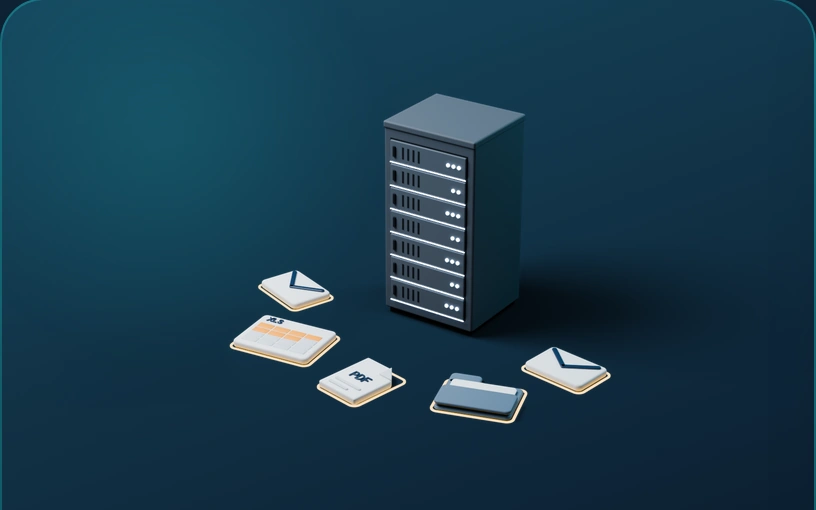
No one integrates the full process
Each tool covers one part. The exceptions that require judgment pile up in spreadsheets, emails and meetings, with no end-to-end traceability.

The team that could lead the improvement is busy operating
The people who know the process from the inside are the same ones holding up the day-to-day. Daily operations leave no room to rethink the process.
This is what silent manual work looks like.
The process lives scattered across emails, spreadsheets, PDFs and folders. Someone stitches it together by hand.
traza turns it into a single flow.
End to end, with the team stepping in only where judgment is needed.
What traza. does
traza. starts with an assessment
 The five finance processes: Order to cash, Procure to pay, Treasury, Supply chain, Record to report.
Where the manual work is and what it costs
traza. goes through each finance process step by step and, with the client, chooses which part to start with.
Redesign
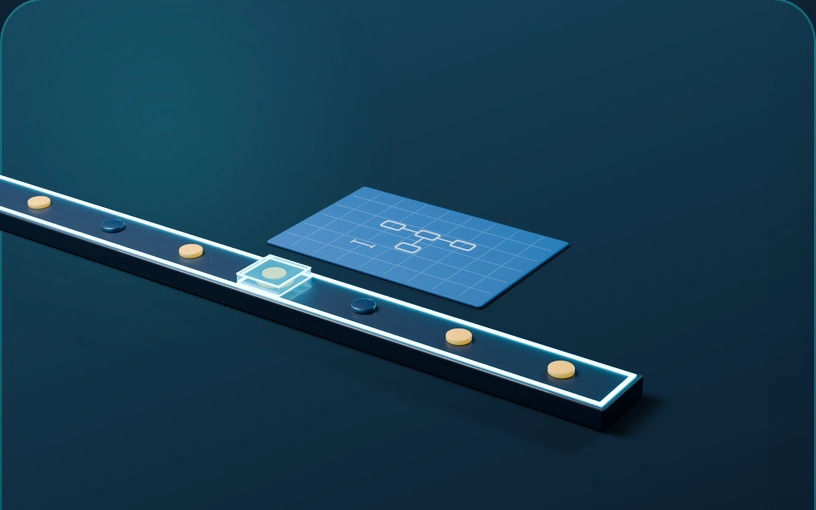
The chosen part is redesigned
The part is mapped as it runs today; then the order of the steps, their rules and who performs each one are defined.
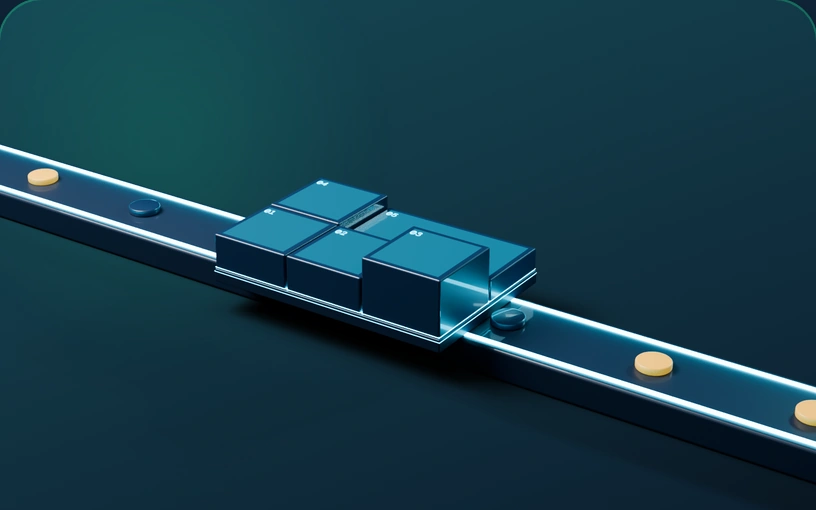
The redesigned part, up and running, is a cell
traza. delivers each cell up and running inside the client's operation, around their ERP.

The cycle
Every cell is built from the same four stages
-
Capture
Information comes in and becomes verifiable data.
-
Cross-check
Sources are compared and differences are flagged.
-
Judgment
The rules are applied, and whatever a rule can't settle goes to a person.
-
Output
The deliverable is produced and delivered where it belongs.
-
Orchestration
Coordinates the stages.
-
Governance
Permissions, approvals and an audit trail that can't be altered.
The executors
Each step of the cell has a defined executor


Code
When the rule is exact.
AI model
When a document needs interpreting or an assignment suggested.

traza. workers
Agents that take on review and approval within governance.

Person
When the decision is theirs. With traza. workers, they shift to oversight.
All of them work under the same governance and leave the same record.
Human judgment
If needed, the people at traza. can join the company's team to apply the human judgment the process requires.

COSO
traza. is designed on the COSO framework, the framework SOX compliance and external auditors rely on.
Internal control →
The console
Cells run in the traza. console.
In the console the client configures each cell, maintains master data, follows every entry and its status, and receives in an inbox the exceptions that need a person.
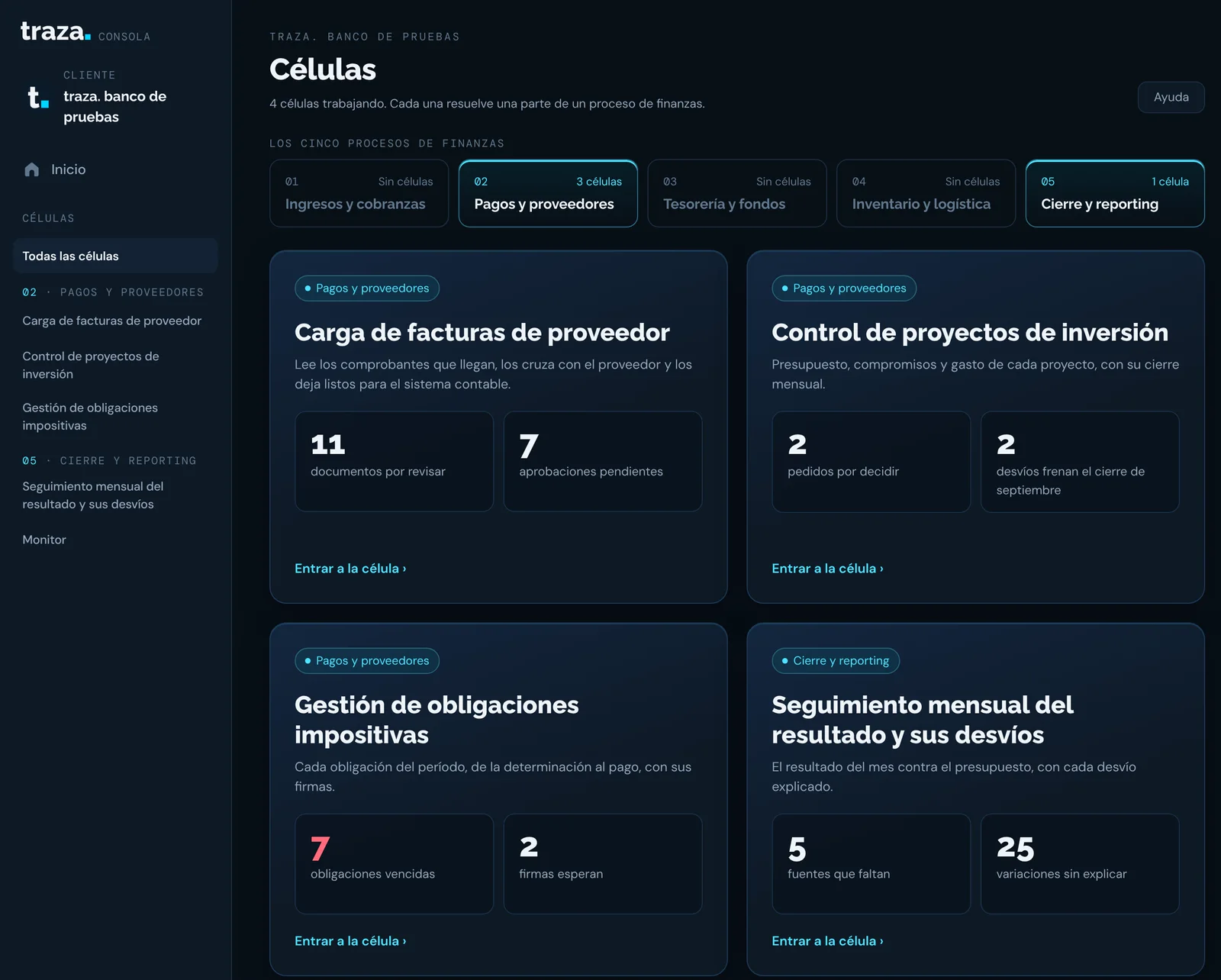
The same cycle builds other cells across all five processes.
Demo console, with fictitious data.
Why traza.
traza. answers for the result
traza. doesn't sell hours or licenses. It delivers each cell up and running, with an owner for every decision, operating around the ERP wherever the client chooses. The solution combines code in the cells, AI in traza. workers and human judgment.
-
Method →
01Process knowledge from the inside
15+ years in finance at leading companies.
-
Method →
02Defined scope, measurable result
Scoped by process: no open-ended projects or indefinite retainers.
-
Governance →
03No risk to current operations
Work happens on the tools the organization already has approved, without touching the ERP or adding friction with IT.
-
traza. Workers →
04A grounded decision on where AI applies
Deterministic workflow where an error affects financial information; AI agents where the process allows it.
-
Method →
05Shorter process mapping
The Discovery Agent walks through the process, so mapping takes less time.
-
Method →
06Closing the implementation gap
Tools already in place rarely deliver 100%. traza. covers the last stretch they leave unfinished.
-
Internal control →
07AI under internal control
AI is designed with the COSO internal control framework, the framework SOX compliance and external auditors rely on: an approval owner, segregation of duties and evidence for every automated decision.
Hire people, services or technology: either way, the client carries the risk of the outcome.
Frequently asked questions
Scope, method and operation
Straight answers before the first conversation.
01What does traza. actually do?
traza. starts with an assessment of the finance processes, redesigns the chosen part and delivers it up and running as a cell, around the ERP. It doesn't sell hours or licenses: it answers for the result.
02What kind of company is it for?
For mid-market companies in Latin America: CFOs and finance leaders. Also for founders of growing companies that need to scale operations without adding structure.
03Which processes can it automate?
Parts of the five finance processes: Order to cash, Procure to pay, Treasury, Supply chain and Record to report. Each cell is a redesigned part of one of them. Cells →
04Does it use AI for everything?
No. Every step in a cell has a defined executor: code when the rule is exact, an AI model when a document needs interpreting, a traza. worker to review and prepare within governance, and a person when the decision is theirs. traza. Workers →
05What happens with exceptions?
Whatever a rule can't settle goes to a person, in the console inbox, with the case and its context; the rest keeps flowing. Every decision is logged.
06Does traza. replace the ERP?
No. The ERP remains the system of record. traza. works around it, with the ERP and the tools the organization already has: it takes the information the ERP doesn't receive, processes it with the client's rules and returns the result with full traceability. Governance →
07Are the solutions in-house or third-party?
First, what is already there is optimized; then a proven market solution is integrated; something is built only when no option measures up. Always integrated with the ERP. Method →
08How does it start?
With an assessment of the operation, supported by the Discovery Agent: where the manual work is and what it costs. Together with the client, the part to start with is chosen, and the journey continues with design, implementation and ongoing operation. Method →
09How is my company's data protected?
Accounting data never leaves the client's environment. The cell runs on their infrastructure, in their cloud or in the traza. cloud, with the minimum access each process needs and confidentiality agreements. Governance →
10Does it create dependency on traza.?
No. Every cell built remains the client's, documented and with exit guarantees. Governance →
11Who maintains the automation afterwards?
There are two options: traza. keeps operating the cell, with human review of exceptions and improvements when the operation changes, or the internal team sustains it with the full documentation. Human judgment →
Something still unanswered?
Let's talk about the process that takes the most time.
Team
Who we are
The people behind traza.




Contact
Let's talk.
Let's talk about the process that costs the most time and money.