From the five processes to the cell
A cell is the redesigned part, built from the stages of the cycle and up and running.
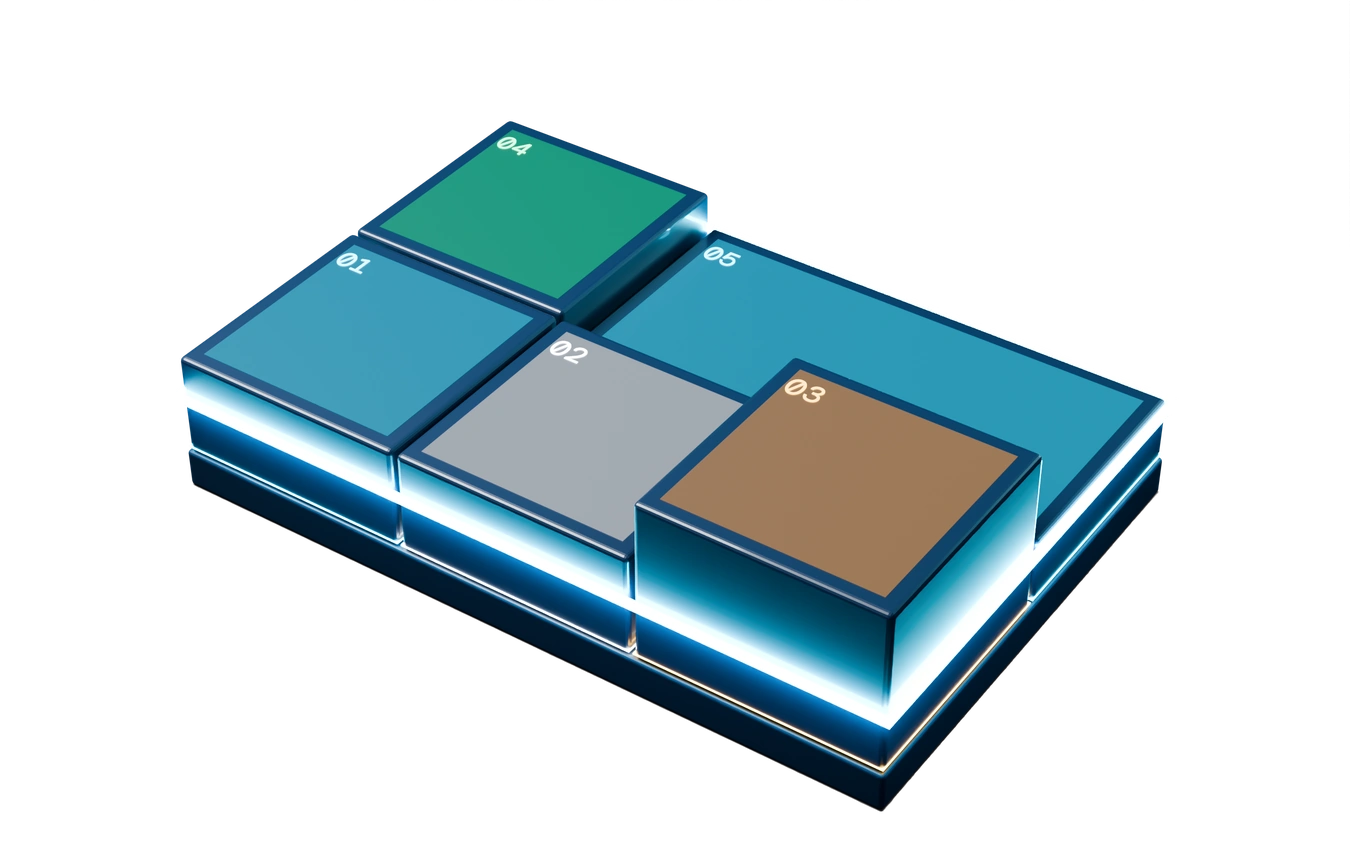
The pieces of a cell
Capture
Information comes in and becomes verifiable data.
Cross-check
Sources are compared and differences are flagged.

Judgment
The rules are applied, and whatever a rule can't settle goes to a person.
Output
The deliverable is produced and delivered where it belongs.
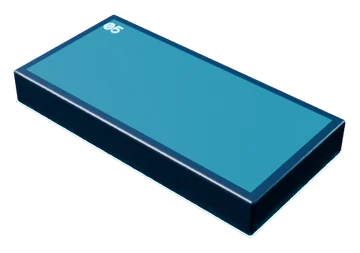
Orchestration
Coordinates the stages.

Governance
Permissions, approvals and an audit trail that can't be altered.
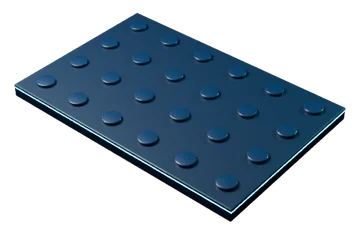
Client base
Where the pieces of each cell are assembled, inside the client's environment.
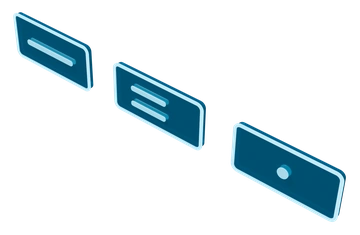
Rule tabs
Each client's rules: the only thing that changes from one cell to another.
The traza. console
Where the client manages its cells.
- 01
Sees all of its cells
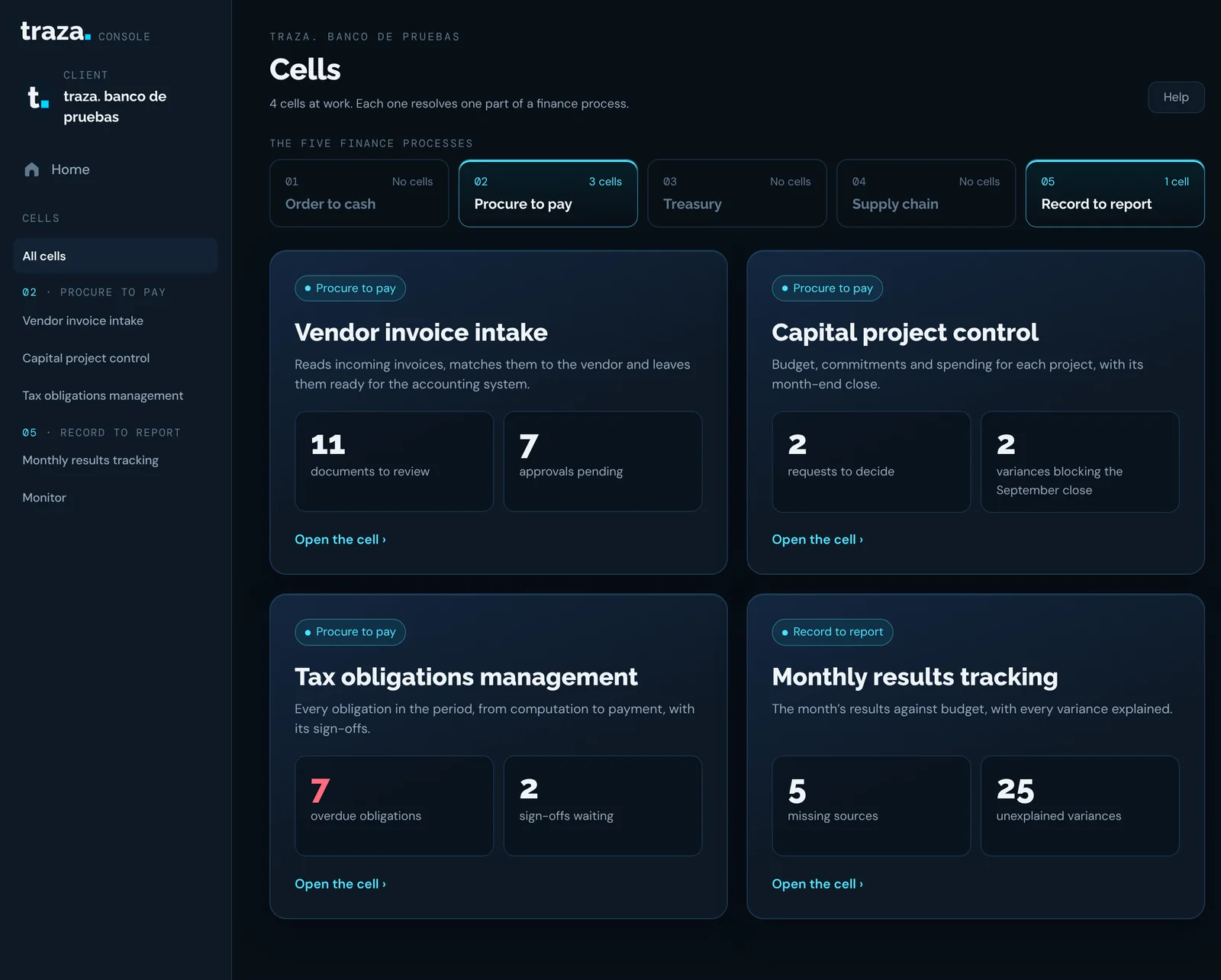
- 02
Configures each cell
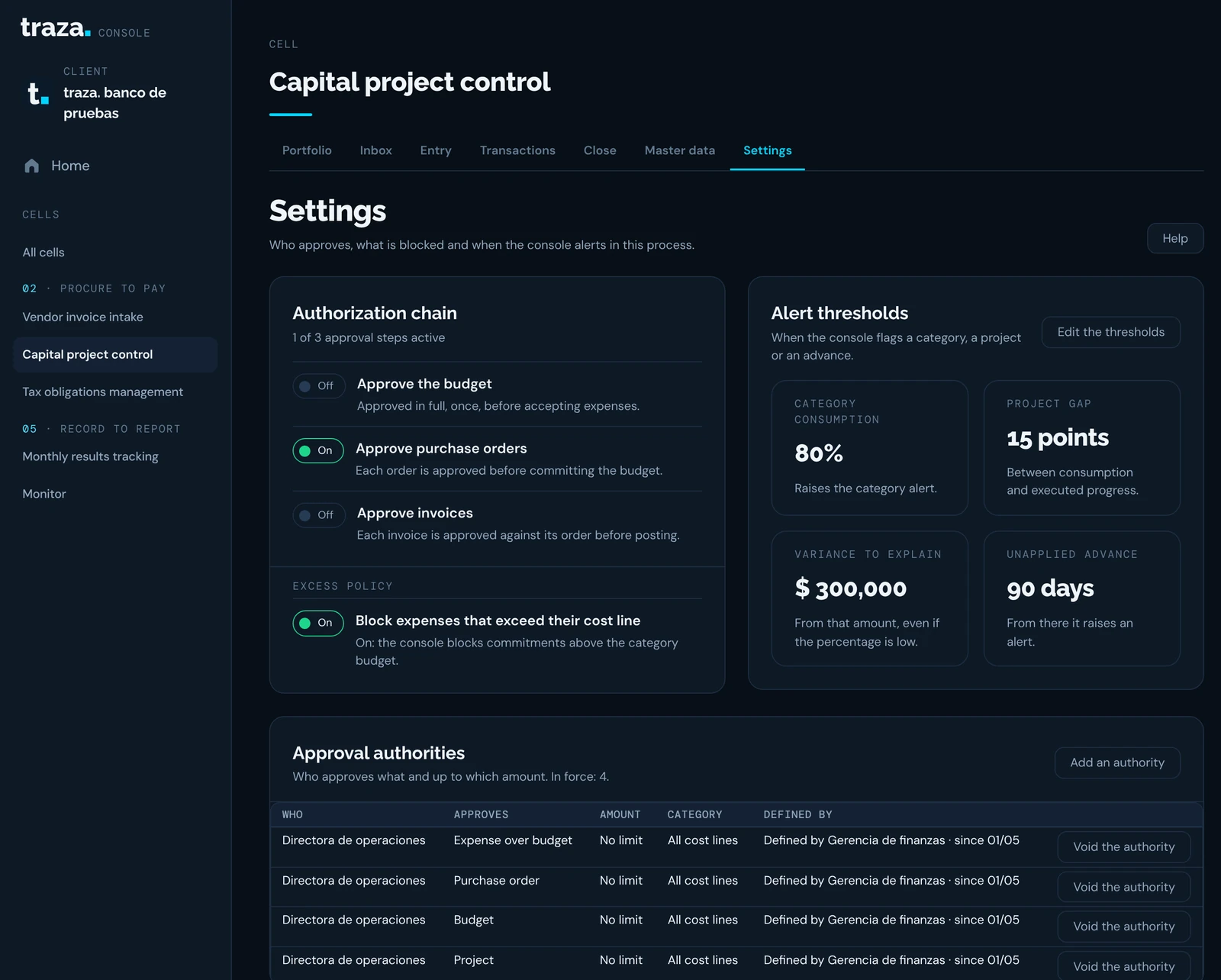
- 03
Maintains master data
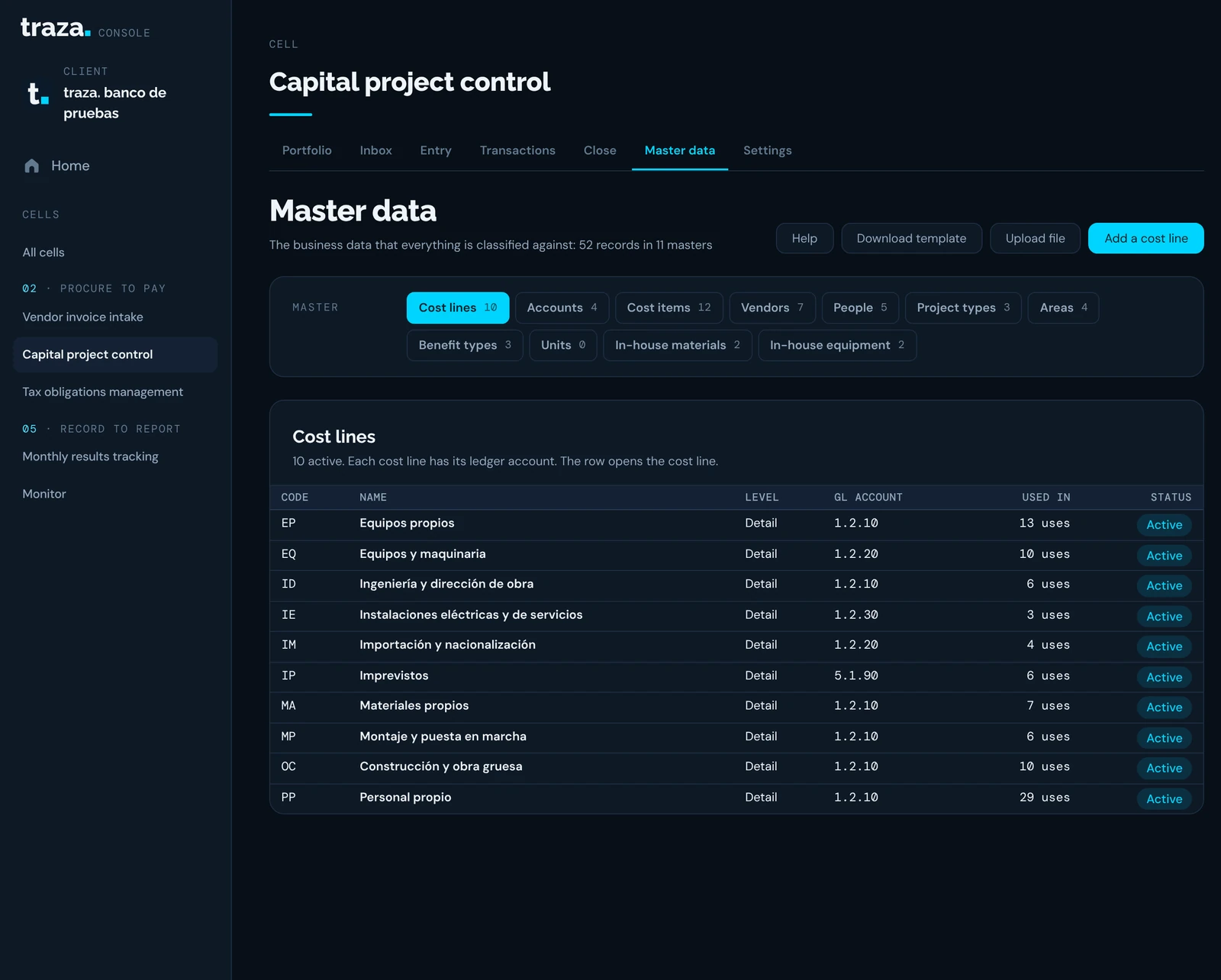
- 04
Follows every entry and its status
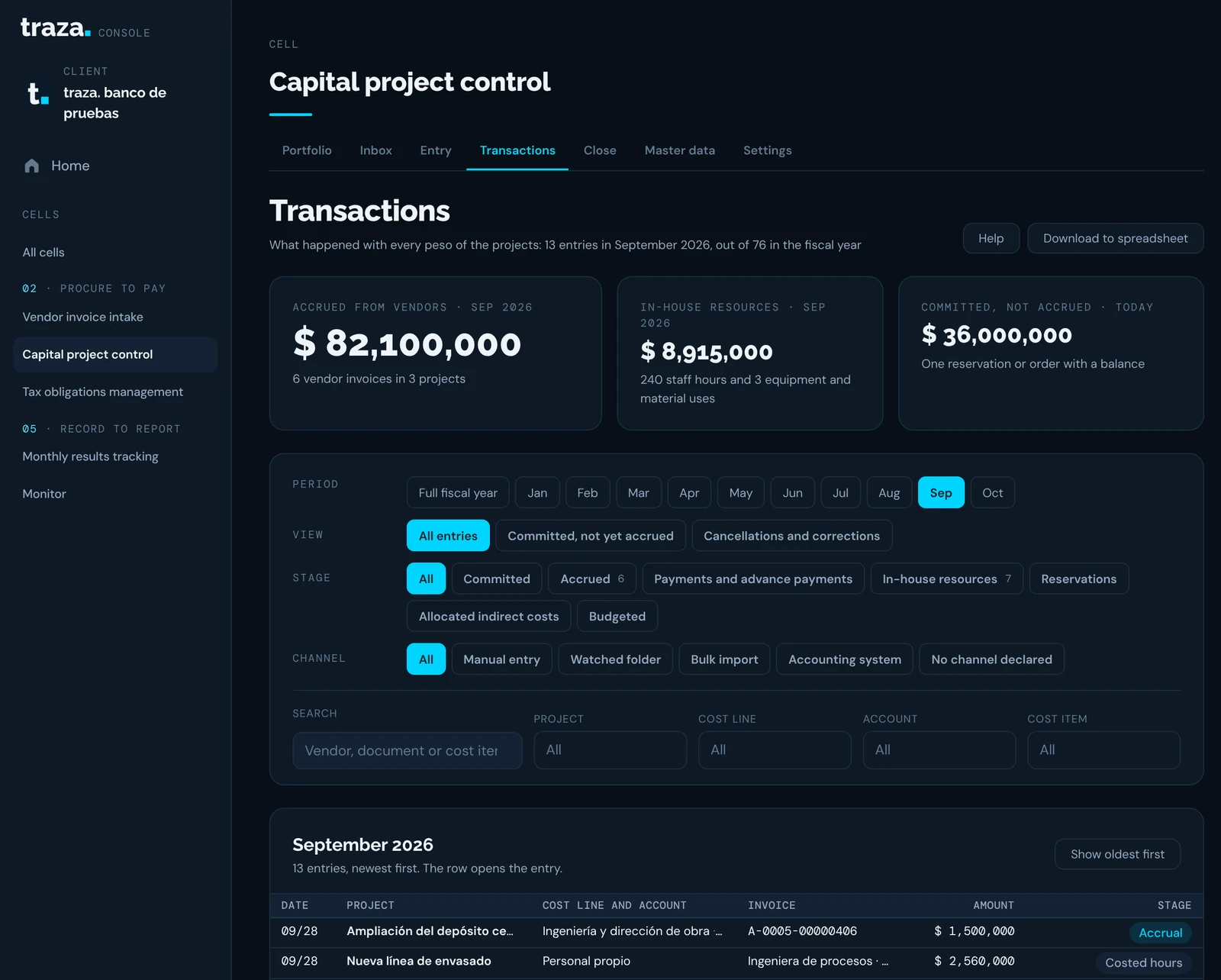
- 05
Gets the cases that need a person in an inbox
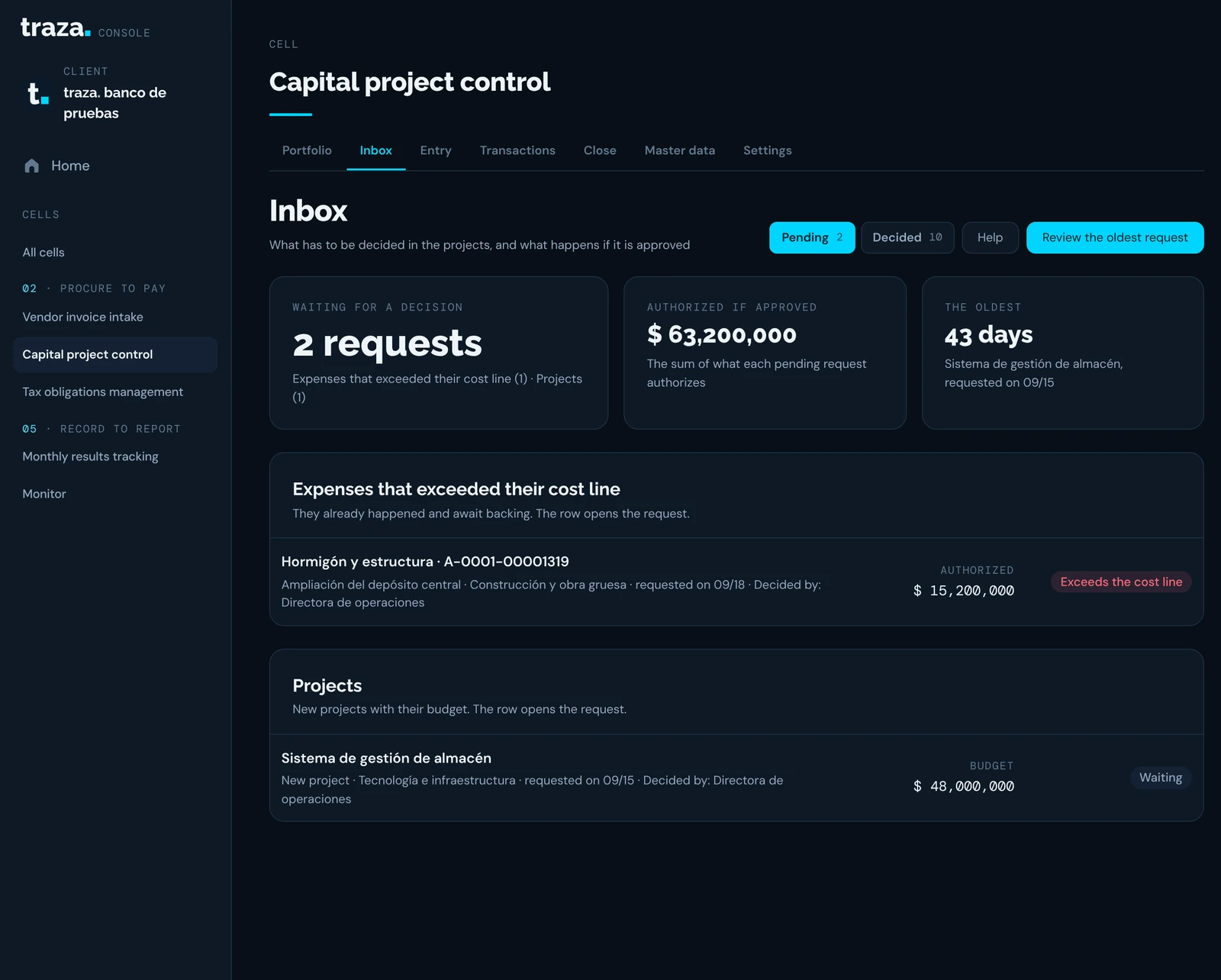
Demo console, with fictitious data.
The five processes
The five finance processes
Each cell belongs to one process.
Invoices out on time, with no rework. When billing data lives outside the ERP, the bridge is built.
Limits and holds applied with consistent judgment.
Systematic dunning, with history per customer.
Master data validated and up to date.
The ERP issues them; the gap is the approval workflow and traceability.
Every payment applied to its invoice.
Allowances and write-offs with a clear policy.
Build · in-house
- Cash application and reconciliation: statement ↔ invoice matching, exceptions to review.
- Document intake: receives, extracts the data, validates against master data and leaves it ready for the ERP.
- Systematic dunning by aging bucket.
Integrate · market solutions
- E-invoicing
- Collections and payment platform
- Reconciliation engine at scale
From purchase order to invoice with no manual keying, using 3-way match.
Validated, consistent vendor master data.
Renewals and expirations under control. Today it usually lives in spreadsheets.
Receipts, reconciliations and cash counts, paperless.
Expenses processed in hours, not weeks.
Gifts and entertainment, approved and recorded.
Calculation, filing and payment of tax returns.
The HR system calculates payroll; the gap is the payment and the integration.
Build · in-house
- Intake and 3-way match of vendor invoices.
- Payment approval workflow with thresholds and traceability.
Integrate · market solutions
- Expense management and corporate card platform
- Tax compliance
- Payroll system
Accounts, signers and access, kept in order.
Month-end close with no differences carried forward.
Payment orders with a full audit trail.
Daily position and reliable forecast. Today it usually lives in spreadsheets.
Build · in-house
- Bank reconciliation: reads each bank, common format, matches and routes exceptions.
- Consolidated cash position and forecast.
Integrate · market solutions
- Reconciliation engine
- Payments and business banking platform
- Treasury and cash-forecasting tool
It's the most operational process: traza. comes in from the financial side (valuation, physical vs. book stock, cost) rather than pure logistics.
How much and when to replenish, with data.
Reliable supply at the best cost.
From truck to system, with no loss of traceability.
From plan to closed order, with actual consumption recorded.
Physical stock equal to book stock; inventory reconciliation is the gap.
Each product's cost from actual consumption and overheads, not outdated standards.
Deliveries on time and complete.
Build · in-house
- Inventory reconciliation: physical vs. book.
- Stockout and overstock alerts, data-driven.
Integrate · market solutions
- Warehouse management
- Demand planning tool
- Transport and logistics management
Close in days, not weeks.
Recurring, with no manual entry.
Additions, disposals and depreciation, up to date.
Cost and margin by project, client or service. Today it usually lives in spreadsheets.
A single version of every number.
Intercompany balances that reconcile.
Build · in-house
- Automated recurring entries (accruals and provisions).
- Orchestrated close checklist: tasks, dependencies and status.
Integrate · market solutions
- Close and reconciliation tool
- Reporting and BI platform
- Consolidation engine
Each stage is built once.
It serves every new cell; only the client's rules change.
Let's find the process that eats up the most time
A short assessment is enough to see which of the five processes to tackle first, and which route to take.
Book a callTo find where to start
To work on a specific process