Method
From assessment to operation
Each phase delivers a result that the next one takes as its starting point.
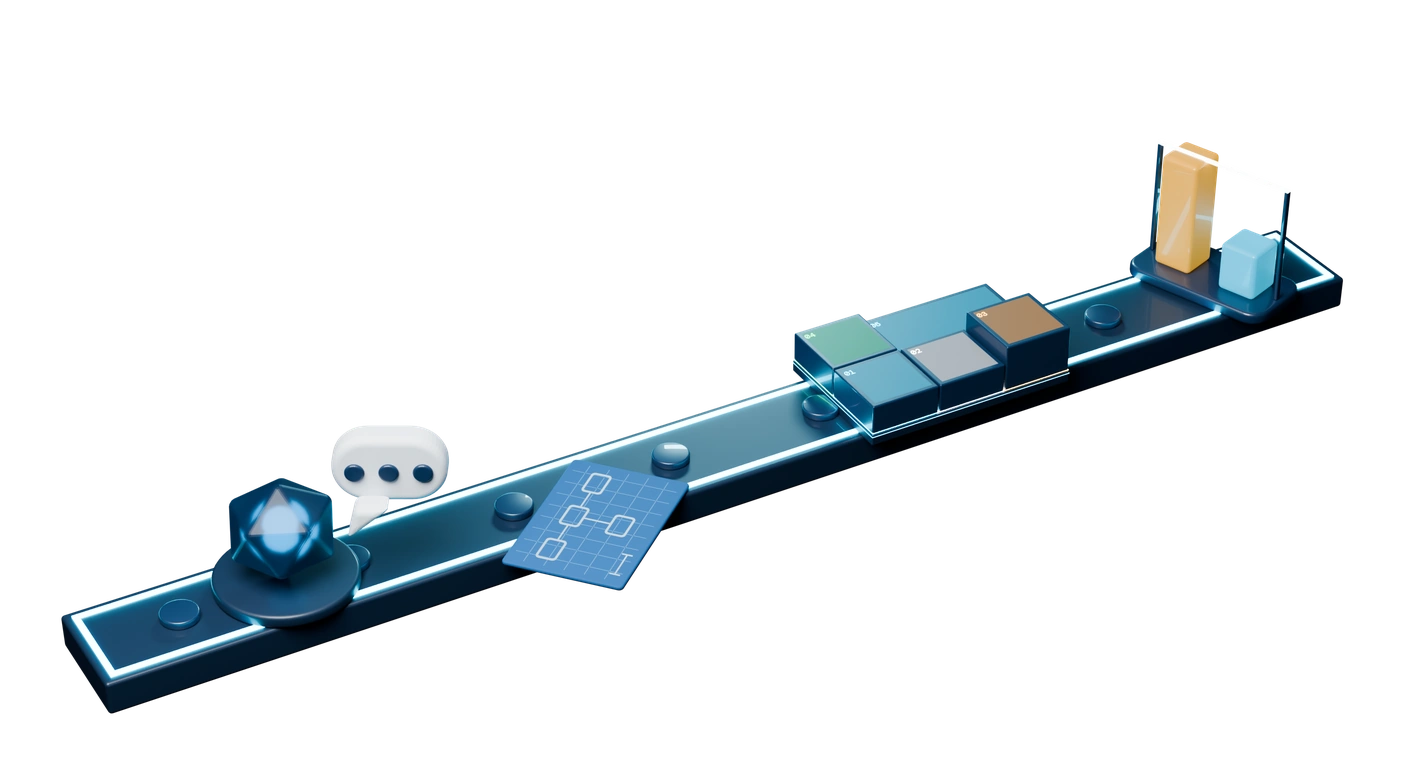 AssessmentDesignImplementationOngoing operation
- Assessment
- Design
- Implementation
- Ongoing operation
The pieces
The four phases of the journey
The method starts by understanding, not by solving.
 Phase 01
Assessment
Maps the current process and evaluates it in detail.
- Map of the operation
- Critical points
- Choice of where to start
Supported by the Discovery Agent
On the client's sideHuman judgmentConversations with the team, day-to-day context and prioritization criteria
Maturity assessment and technology training
DeliverableThe mapped process and its critical points, ranked by impact and root cause.
 Phase 02
Design
Redesigns the process from that assessment, without tying it to a technology.
- Redesign: current state and future state
- Proposal with scope and expected result
On the client's sideHuman judgmentThe detail of the real process and the decision to move forward
AI application strategy and AI governance framework
DeliverableThe improved process, with its policies and procedures.
 Phase 03
Implementation
Builds the solution on tools already approved, with human review at every sensitive step.
- Build, cell by cell
- Go-live
On the client's sideHuman judgmentValidation along the way
Initial data load, temporary operation of a role and candidate search
DeliverableThe solution in production, with its user manual.
 Phase 04
Ongoing operation
Keeps each cell running and improves it incrementally.
- Operation and maintenance
- Incremental improvements
On the client's sideHuman judgmentUsage feedback
Human review of the exceptions
DeliverableThe process running, measured against its starting point.
The assessment
From the real process to its critical points
The assessment starts from the operation as it works, analyzes it in detail and returns its critical points ranked by impact.
a · The starting point
The assessment is built on the real operation, not on an ideal version.
How the process runs, in the words of those who operate it.
The spreadsheets, templates and reports it runs on.
Formal procedures and policies, where they exist.
Full runs of the process, with their exceptions.
b · The analysis
The process is analyzed in depth, across six groups.
The process broken down from chain to task.
Why the process exists and what goal it serves.
Who runs it, with which systems and at what pace.
What can fail and what controls contain it.
Which processes feed it and which depend on it.
The findings, the proposed improvement and the plan.
The assessment combines interviews, observation, document review and data analysis.
c · The result
The analysis does not produce a list of problems. The critical points are ranked by impact and connected by their cause.
The current cost of the problem, in time, money and risk.
How often it happens.
Whether it causes other problems or results from them.
The underlying cause: it connects the critical points and marks where to begin.
The detail
Decision, delivery and measurement
Order first, then the tool
Four questions, always in the same order.
Step 01
Is what is already there enough?
Tools already in place usually cover more than what is used: modules left off, half-finished configurations. If the capability is there, it is switched on and tuned before adding anything.
Optimize what is thereStep 02
Is there a proven solution?
If there is a proven, supported solution, it is integrated into the flow instead of building one. Operation and maintenance stay with the vendor.
Integrate a third partyStep 03
Does it need to be built?
When no option fits, it is built on tools already approved. Sometimes a standard automation; sometimes a custom build.
In-house buildStep 04
And the ERP?
All of the above integrates with the ERP the organization already uses, which remains the system of record. It isn't replaced; the solution is built around it.
Integrate with the ERP- SAP
- Odoo
- Tango
- Bejerman
- Calipso
- Dynamics 365
- NetSuite
- Oracle EBS
- QuickBooks
Where the solution runs
What changes is where it runs and who provides the infrastructure.
 Managed service
In traza.'s cloud
traza. hosts it and keeps it running. The simplest option: nothing for the organization to manage.
 Client account
In the client's cloud
It runs in the cloud, on the organization's accounts and credentials. traza. builds and deploys it inside that environment, which stays under its control.
 Own infrastructure
On the client's infrastructure
For residency or regulatory requirements, it runs on the organization's own infrastructure.
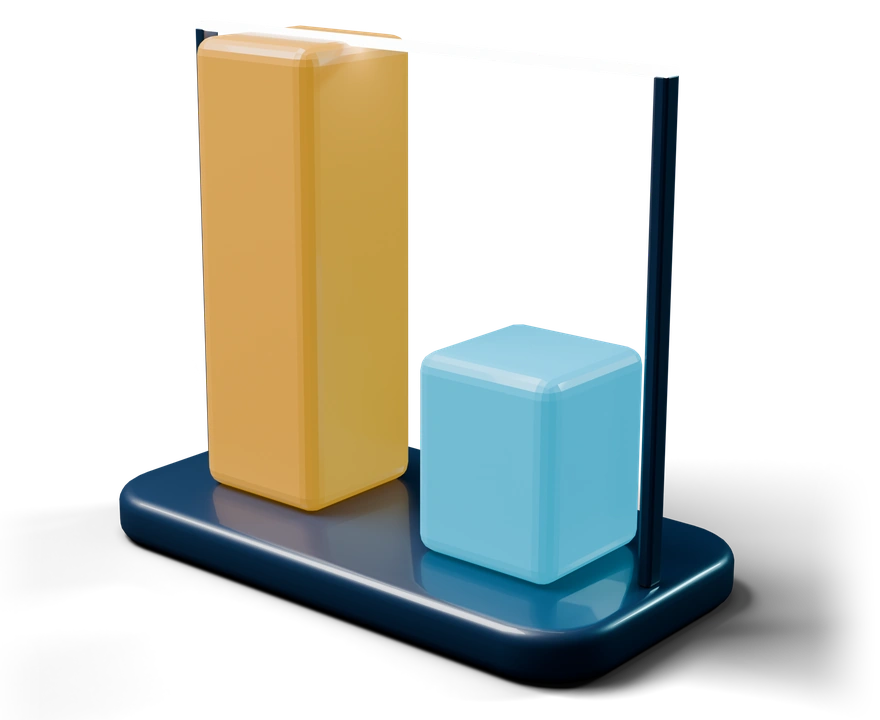
Before and after, on the same process
Measuring is part of understanding the process. Before building, traza. records how much time, money and capacity it consumes. With the solution running, it measures the same again.
How the process works today is recorded.
The same is measured, with the solution running.
The improvement: the difference between the two moments, on real data.
From assessment to operation, in a single journey.
The first step is an assessment of the operation, with the Discovery Agent.
Start the assessmentTo find where to start
To work on a specific process